
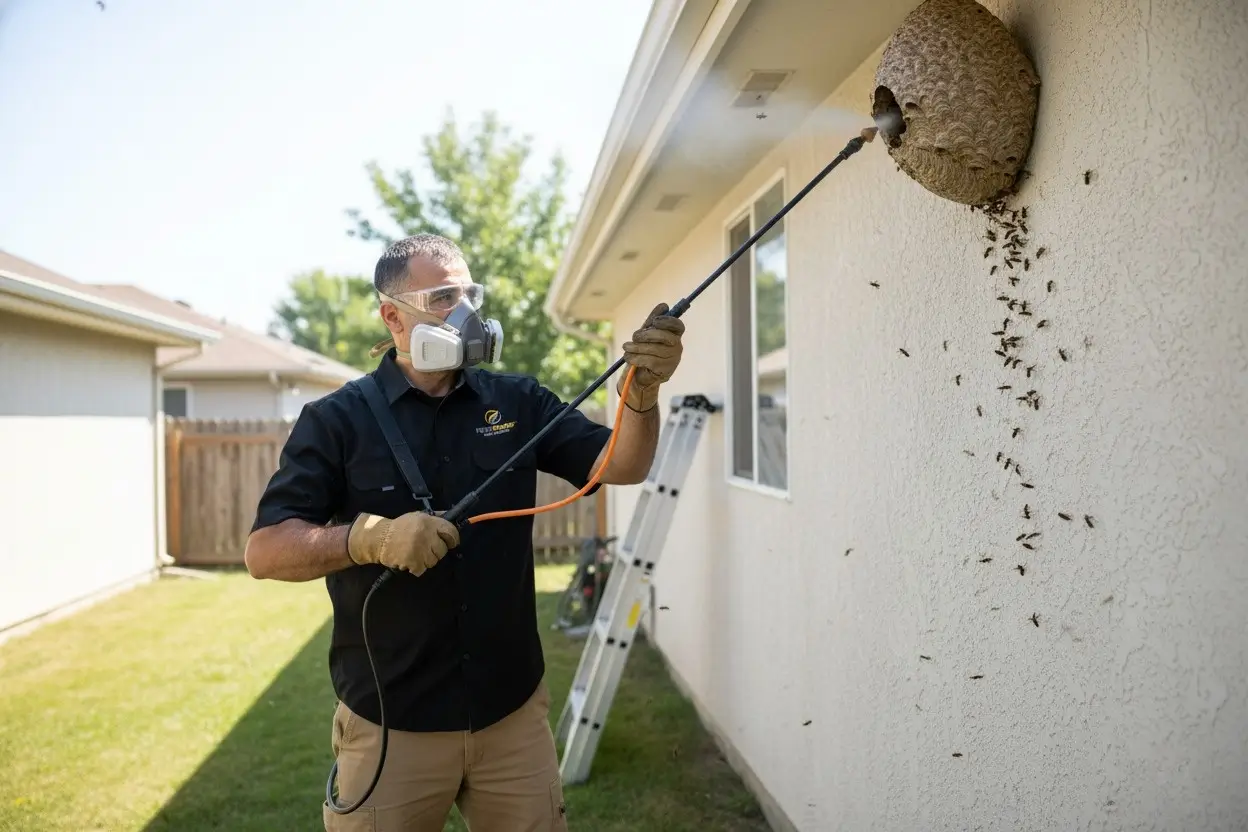
Late summer brings predictable wasp invasions across Manawatu. German and common wasps establish nests in roof cavities, garden sheds, and commercial buildings as temperatures rise and food sources multiply. These aggressive insects pose genuine safety hazards, particularly around schools, parks, and outdoor dining areas where children and customers gather.
Wasp control in Manawatu requires understanding local climate patterns and building stock. Palmerston North’s urban density creates ideal nesting environments in residential cavities and commercial structures. Levin’s coastal position intensifies activity during warm months. Rural properties around Feilding and Shannon face exposure from surrounding farmland where wasps hunt insects and scavenge livestock feed areas. Older timber homes prevalent across the region provide multiple entry points and cavity spaces attractive to founding queens.
Wasp behaviour changes markedly through seasons. Spring nests start small as queens emerge from winter hibernation. Colony populations explode through summer, reaching peak aggression in March and April when nests contain hundreds or thousands of workers defending territories fiercely. Autumn decline brings final foraging pushes before winter dormancy. Understanding this lifecycle informs timing decisions for removal and influences treatment success rates.
Property owners often delay treatment, hoping nests disappear naturally. This strategy fails consistently and dangerously. Established colonies expand relentlessly, with workers becoming increasingly aggressive as colony defence mechanisms strengthen. Removal becomes exponentially more dangerous when nests mature beyond early-season stages. Early intervention during spring and early summer prevents escalation to crisis points requiring emergency services.
Misidentification complicates decisions and environmental outcomes. Many people confuse wasps with honeybees and bumblebees, leading to unnecessary destruction of beneficial pollinators. Wasps possess smooth bodies and aggressive temperaments, attacking without provocation. Honeybees appear fuzzy, carry visible pollen baskets, and display docile behaviour unless defending hives directly. Bumblebees resemble honeybees with stouter, hairier builds. Destroying beneficial pollinators through misidentification represents genuine environmental loss affecting food production and native ecosystems.
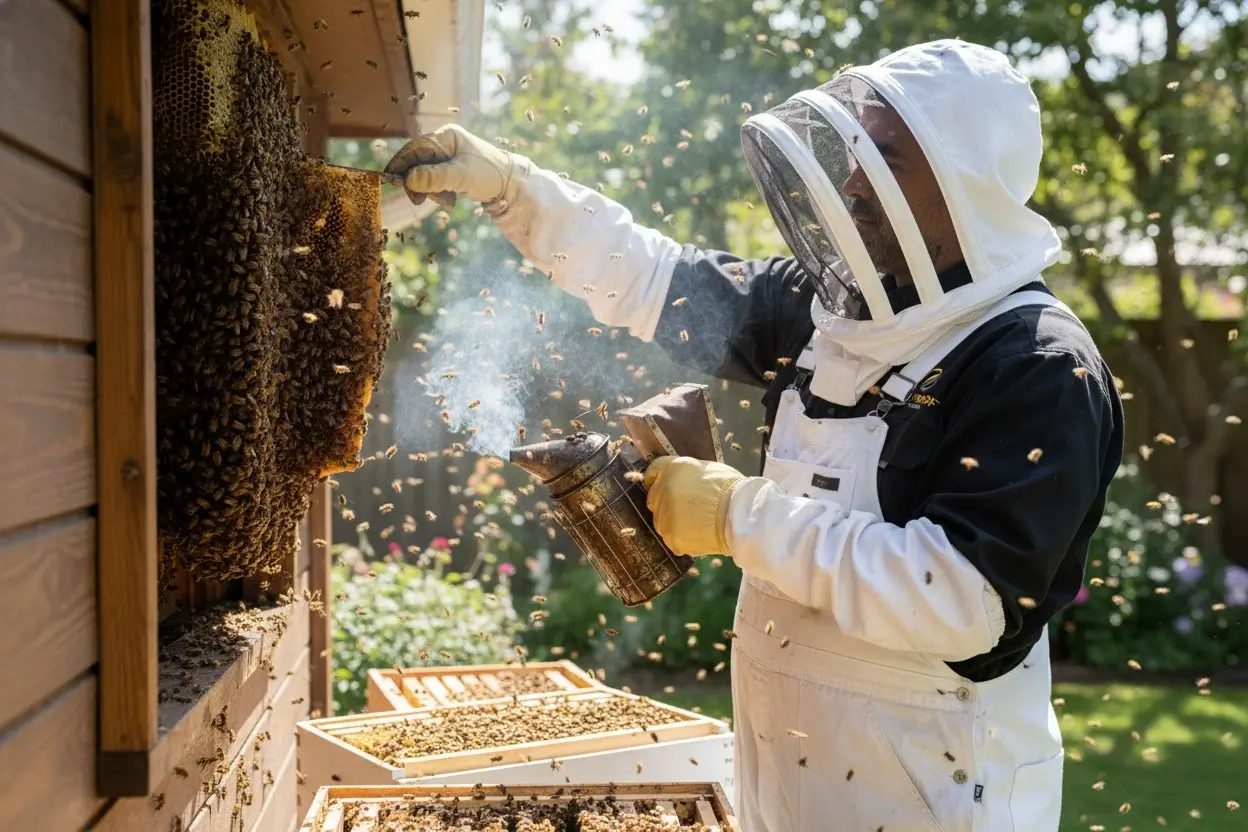
Wasp control in Manawatu demands professional expertise and proper safety protocols. DIY removal attempts frequently result in stings, property damage, and incomplete nest elimination. Protective gear provides insufficient defence against coordinated colony attacks. Inappropriate chemicals contaminate soil and harm non-target insects. Nests abandoned without proper treatment simply relocate nearby, returning within weeks to identical or adjacent locations.
Professional technicians employ targeted insecticide dusts and sprays applied directly to nest entrances and cavities. These products incapacitate workers and queens rapidly, preventing escape and reestablishment elsewhere. Application timing matters critically; early morning and dusk interventions catch colonies at rest, reducing defensive responses. Wasp facts and biology information guide technicians in understanding nest development stages and vulnerability windows.
Weather considerations influence efficacy significantly. Rain washes away treatments while strong winds disperse chemical coverage, requiring reapplication. Temperature fluctuations affect insecticide performance; application during mild conditions optimises absorption and worker mortality. Humidity levels impact dust penetration into cavity spaces. Professional scheduling accounts for seasonal weather patterns across Palmerston North and surrounding Manawatu districts.
Nest location determines removal difficulty and safety protocols. Ground-level nests in garden structures or beneath eaves allow safer access with standard ladders and protective equipment. Roof cavity nests require roofing expertise and fall protection equipment. High branches demand aerial work platforms or specialist climbing gear. Internal cavity nests necessitate careful drilling and injection techniques preventing structural damage. Regional pest management plans establish safety standards for residential and commercial nest removal.
Post-removal monitoring ensures complete success and prevents recurrence. Technicians inspect sites within 24 to 48 hours, confirming nest abandonment and worker death. Surviving queens attempting rebuilding receive secondary treatment. Some properties develop recurring infestations at identical locations; additional preventative measures including cavity sealing, structural modifications, and landscaping changes eliminate future nesting opportunities permanently.
Seasonal guarantees recognise regional reality. Single season guarantees mean additional nests discovered and removed at no extra cost during the same calendar year. This commitment reflects confidence in removal quality and acknowledges that early-season nests spawn satellite colonies throughout summer months. Management strategies for Vespula wasps confirm that seasonal coordination reduces overall infestation severity. Transparent flat-fee pricing eliminates surprise charges, providing budget certainty regardless of nest size or location difficulty.
Wasp control in Manawatu must balance human safety against environmental stewardship and ecosystem protection. Indiscriminate pest control damages broader ecosystems and biodiversity networks. Honeybees and bumblebees provide critical pollination services supporting agriculture, food security, and native plant reproduction. Unnecessary bee elimination weakens food networks and reduces ecosystem resilience.
Professional services distinguish between wasp and bee nests through careful identification and inspection. Honeybees receive relocation to local beekeepers rather than destruction, preserving hive populations. Bumblebee nests typically remain undisturbed unless positioned in high-traffic areas; repositioning takes priority over extermination. This selective approach protects beneficial species while eliminating genuine threats to human safety and property.
Schools and public facilities require child-safe removal protocols throughout Manawatu districts. Chemical treatments employ products approved for use near inhabited spaces and vulnerable populations. Application timing avoids school hours and play periods, protecting student exposure. Perimeter barriers and deterrent measures reduce recolonisation risks around educational buildings and playgrounds. Parks and reserves benefit from similar considerations, protecting community gatherings and outdoor recreation activities.
Food service establishments demand urgent wasp management during peak season. Restaurants, cafes, and takeaway premises attract wasps seeking protein and sugar sources from food preparation areas and waste. Outdoor dining areas become unusable when wasps dominate, reducing customer comfort and business revenue. Kitchen contamination poses health code violations and food safety risks. Rapid professional removal restores normal operations while preventing customer complaints and regulatory sanctions.